The E46 at 28: Why a 2000s 3 Series Still Makes Sense in the Black Country
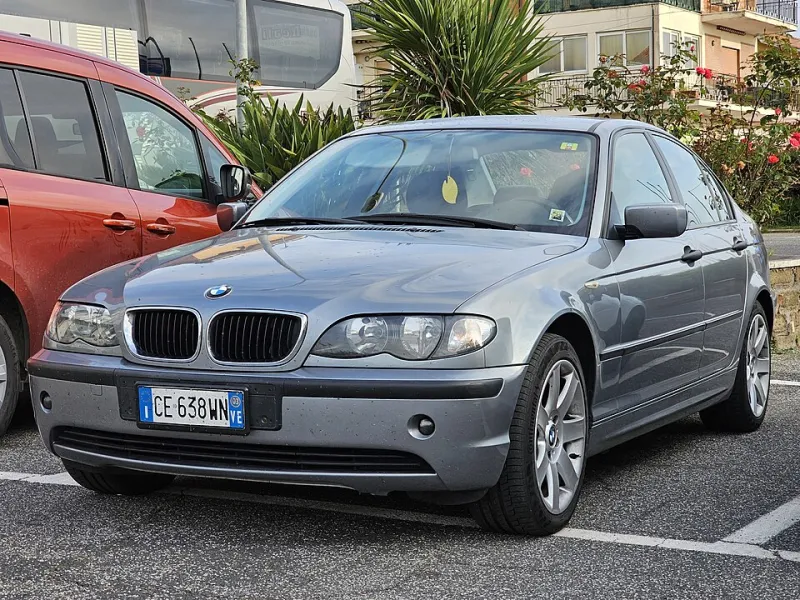
Photo: Damian B Oh, CC BY-SA 4.0, via Wikimedia Commons
There's a particular sight that turns up in Wolverhampton car parks on a dry Sunday: a tidy E46 saloon, probably Topaz Blue or Titanium Silver, probably on style 44s, and almost certainly owned by someone who has spent more on suspension bushes than the car is worth. That last part isn't a criticism. Twenty-eight years after the model arrived in 1998, the E46 has settled into a role few cars manage — genuinely usable everyday transport that also happens to feel special.
Why it still works
Plenty of cars from that era drive well. The E46 does something slightly different: it makes ordinary journeys feel considered. The steering has actual weight and feedback, the six-cylinder engines pull cleanly from low revs, and the ride on standard suspension is supple in a way that most current run-flat-shod saloons have forgotten. Around town it's compact enough for the multi-storey at the Mander Centre. On the A449 towards Stafford it's quiet. And on the run out through Bridgnorth and on towards Ludlow, a well-sorted 330i is still a genuinely lovely thing.
There's also the practical side. Parts availability is the envy of almost any other modern classic. Service items, brakes, suspension components and even trim are widely stocked, and there's a healthy used market. Compare that with a similarly aged Alfa or a left-field Japanese coupe and the difference is stark.
What to buy, and what to walk away from
Petrol six-cylinders get the attention, and rightly so — the M54 is smooth, torquey and, crucially, simpler than the turbocharged engines that followed. A 325i or 330i with a manual gearbox is the enthusiast sweet spot. The four-cylinder 318i is fine but does without the character that makes the car worth owning.
Diesels are the ones to think about carefully. The 320d is economical and the M47 engine is tough, but it's also the model that runs into clean air charges and, in older cars, swirl flap and turbo issues. That's not a reason to avoid one — just a reason to buy on condition and history rather than price.
Rust is the real enemy. Jacking points, rear arches, the boot floor around the battery tray, and the front wings are all worth a torch and a screwdriver. A car with a folder of receipts and a recent cooling system overhaul is worth considerably more than a shiny one with no paperwork. Cooling systems are the other known weak point — water pump, thermostat and expansion tank are consumables in practice, not ifs.
The Clean Air Zone question
This matters for anyone who commutes into central Birmingham. The zone operates within the A4540 Middleway ring road and charges non-compliant vehicles daily. For petrol cars the bar is Euro 4, which broadly means a 2005 or later registration — plenty of E46s sit just the wrong side of that line, so check your specific car's emissions status before assuming. Diesels need Euro 6, which effectively rules out every E46 diesel. There are exemptions and occasional scheme support, but the honest advice is simple: if you drive into Birmingham city centre regularly, factor the charge into your running costs or use a compliant car for those trips and keep the E46 for everything else.
Keeping one alive without losing the plot
E46 ownership goes wrong when people treat them as cheap cars. They aren't cheap anymore — they're affordable modern classics, and the maintenance expectations should match. Budget for a proper inspection service, use quality tyres, and don't ignore a knock from the front end because the car still drives. Front control arm bushes and rear trailing arm bushes are wear items; replacing them transforms the car.
Diagnostics matter too. These cars talk to a scanner, and a specialist can read stored fault codes, check adaptations and spot the early signs of a failing sensor far faster than guesswork allows. That's the difference between a weekend of frustration and a straightforward fix.
It's also worth being realistic about DIY. Oil, filters, brakes and suspension are all achievable on a driveway. Coding, VANOS work and anything electrical beyond the basics is best left to someone who has done it before.
The verdict
The E46 has crossed into the phase where good ones are quietly appreciating and rough ones are being broken for parts. That means the buying window is narrowing, not widening. If you want a car that's cheap to insure, genuinely repairable, engaging to drive and still comfortable enough for the school run, there's very little at the money that does the job as well.
And if you already own one, the message is simple: keep on top of the cooling system, keep the underside clean through winter, and drive it properly.
Our team at Benham Wolves BMW looks after modern classics as happily as current models — inspections, servicing, diagnostics and honest advice on whether a car is worth saving. Driven by you, and by the cars you actually want to keep.