The Green Pump Question: E10, Super Unleaded and Wolverhampton's Aging BMWs
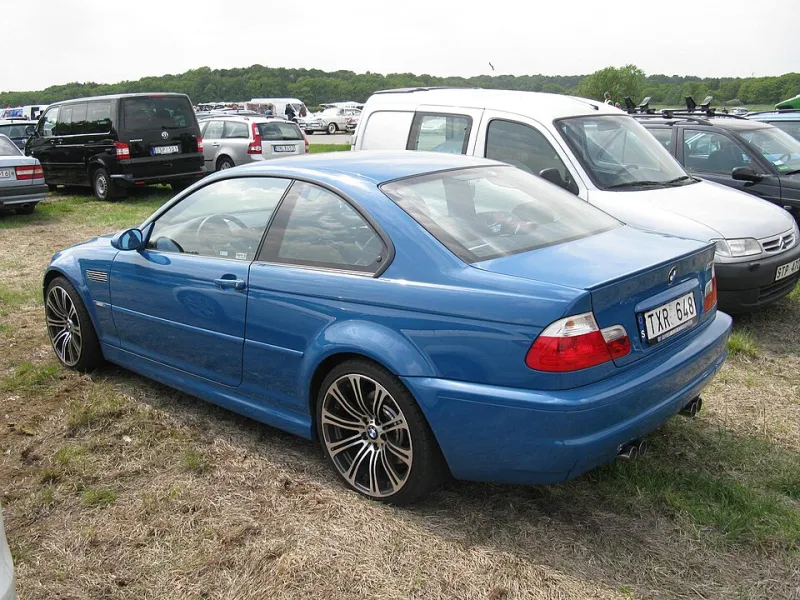
Photo: nakhon100, CC BY 2.0, via Wikimedia Commons
There is a particular moment of hesitation at a Wolverhampton forecourt that owners of older BMWs know well. You pull up, reach for the nozzle, and then pause. The green E10 pump is the cheap, convenient choice. The super unleaded pump is the expensive, slightly self-conscious choice. For a 20- or 25-year-old 3 Series, 5 Series or Z3, it can feel like a small decision with a long tail.
E10 became the standard grade of unleaded in the UK back in September 2021. It contains up to 10% renewable ethanol, compared with the maximum 5% in super unleaded, which is still labelled E5. The change was designed to cut carbon emissions across the national petrol fleet. It was not designed around the fuel lines, pumps and tanks of cars built during the Blair years. That does not mean those cars are doomed. It does mean a bit of thought is worthwhile.
What E10 actually is — and why it matters here
Ethanol is alcohol. In a fuel system it behaves differently from pure petrol. It attracts water, it can be more aggressive to certain rubbers and plastics, and it carries slightly less energy per litre. On a modern engine with sealed components and wide tolerances, those differences are small. On an older BMW that has spent two decades doing short runs around Tettenhall and the occasional blast up the A449, they are worth understanding.
The headline risk is not that your E46 will dissolve on the driveway. It is that ageing fuel lines, pump seals and tank internals may already be tired, and ethanol-blended fuel can accelerate the wear that is already underway. The other issue is water absorption, particularly if the car sits for long periods. A Z3 that comes out on dry Sundays is a very different proposition from a 320d-adjacent 320i doing the school run every morning.
The BMW compatibility picture, model by model
BMW's own guidance has generally pointed to petrol models from the late 1990s onward being E10-compatible, but the details matter and the handbook is the final word. If you are unsure, BMW's online compatibility checker and a call to a specialist are both sensible steps. Around Wolverhampton we see plenty of cars that sit right on the boundary.
E46 3 Series
The E46 is the most common older BMW in this conversation, and for good reason. Most petrol examples — the M43 four-cylinder, the M52 and M54 six-cylinders — are generally regarded as E10-compatible. That does not make E10 compulsory. Owners who do low mileage and want a margin of safety often run super unleaded, while high-mileage daily drivers tend to stick with E10 and keep an eye on fuel-system condition. If your E46 has original rubber fuel lines under the bonnet, have them inspected before you make a firm decision.
E39 5 Series
The E39 spans 1995 to 2003, which means early cars and late cars are not the same story. Later E39s with the M54 engine sit comfortably in the compatible camp. Earlier six-cylinders and the older M52-era cars are closer to the line, and a cherished example with low mileage may justify the extra cost of E5. The E39's fuel system is robust, but it is also old enough that a preventative look at the tank breather and lines is never wasted.
Z3
The Z3 is the classic low-mileage, fair-weather car. That makes it the strongest candidate for super unleaded in this group. E10's water-attracting nature is less welcome in a car that may sit for weeks under a cover. Keep the tank reasonably full to reduce condensation, consider a fuel stabiliser before a long lay-up, and avoid leaving E10 in the system for months on end. If you are doing a big touring trip in a Z3, E10 will usually be fine; if the car is a garage queen, E5 is the kinder routine.
The real-world symptoms to watch
You are not looking for dramatic failure. You are looking for small changes that add up. A faint petrol smell under the bonnet, slightly rough cold starts, a fuel filter that seems to clog sooner than expected, or rubber lines that look glazed and cracked. None of these is proof that E10 has ruined your car. They are prompts to get the fuel system inspected.
Performance claims deserve a cool head. E10 carries marginally less energy than E5, so you may see a tiny drop in economy — often around 1–3% in normal driving. Super unleaded's higher octane can help engines that are designed to exploit it, and older BMW six-cylinders with knock sensors may feel slightly sharper on 97 or 99 RON. But it is not a magic wand. A tired E39 will not be transformed by a tank of premium; it will be improved by fresh plugs, clean filters and correct tyre pressures.
The cost maths at a Wolverhampton forecourt
Super unleaded typically costs somewhere between 12p and 20p more per litre than E10, depending on the station and the week. On a 50-litre fill, that is £6 to £10. If you do 8,000 miles a year at around 30 mpg, you are using roughly 1,200 litres, so the annual difference could land somewhere between £150 and £240.
That is not nothing. But it is also less than a single visit to a specialist for a fuel-pump replacement, and considerably less than sorting out a corroded tank. The sensible question is not 'which fuel is cheapest?' but 'which fuel suits this car's use?' A high-mileage E46 used daily on the A41 is a different risk profile from a Z3 that lives in a garage and comes out for a Sunday run to Bridgnorth.
A sensible fuelling routine
For most older BMWs in everyday Wolverhampton use, E10 is acceptable if the car is compatible and the fuel system is in good order. Have the lines, filter and tank inspected, then use the car regularly enough that fuel does not sit for months. If you are storing the car, fill it with super unleaded, add a stabiliser if you are so inclined, and plan to use it before the season turns.
If you are in any doubt — or if the car is a low-mileage keeper — super unleaded is a reasonable insurance policy. It is not a cure for a neglected fuel system, but it buys a little margin. And if you notice a persistent petrol smell, poor starting or a weeping line, stop guessing and get it looked at. Fuel-system faults are one of the few areas where a small leak can become a much bigger conversation.
At Benham Wolves BMW we see both sides of this. Plenty of older BMWs run happily on E10; plenty of owners sleep better on E5. Neither choice is reckless. What matters is that the decision is made with the car's condition and use in mind, rather than simply reaching for whichever nozzle is nearest.