Short Trips, Long Gaps: Why Your BMW's Service Countdown Deserves a Second Opinion
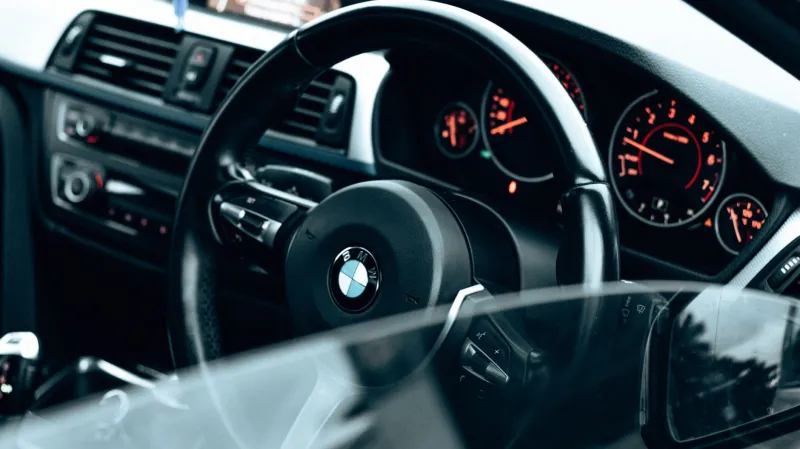
Most Wolverhampton BMWs spend their lives doing what the handbook politely calls short journeys. The school run to Tettenhall, a hop into town, a crawl along the Ring Road, then a cold start again three hours later. Condition Based Servicing - CBS - watches all of this and puts a countdown on the dashboard. The trouble is that a countdown is not a diagnosis.
CBS is genuinely clever, and it has been part of BMW ownership since the late 1990s. It is also a model. Models have blind spots. Knowing where they sit helps you treat the dashboard as a guide rather than a guarantee.
What the car is actually counting
CBS is not a fixed mileage table with a BMW badge on it. The car logs fuel consumed, engine oil temperature, cold starts, journey length, brake pressure and elapsed time, then turns those into service items: engine oil, brake fluid, vehicle check, and the wear sensors for pads and discs. The oil model is the one that matters most. It estimates degradation from how hard the engine has worked and how often it has warmed up, not simply from how far it has rolled.
You can see the current status in iDrive under vehicle status, and a specialist can pull the same data when the car is in the workshop. That is useful context, but it is still a calculation rather than a laboratory report.
That is why two cars with the same mileage can show different countdowns. A 320d that spends its week on the M54 will often look after its oil better than a 118i that never gets past 40mph. The motorway car has heat, airflow and steady load. The town car has condensation, rich running and repeated cold starts. CBS sees some of that. It does not see all of it.
The cold-mile blind spot
Here is the awkward bit for Black Country drivers. A short journey is not a small version of a long one. The engine may never reach the temperature that boils off moisture in the oil. Fuel can dilute the oil during repeated cold starts. The exhaust can stay cool enough to hold water. None of that is dramatic in a single week. Over eighteen months of short hops, it is the difference between oil that is merely old and oil that is tired.
CBS may still show a comfortable interval because the mileage is low and fuel use is modest. That is the overconfidence to watch for. If your annual mileage is under 6,000 and most trips are under ten miles, the countdown is telling you what the sensors can see, not what the oil is doing. Many manufacturers, BMW included, have a severe-service footnote in the schedule for exactly this pattern. It is worth reading before you assume the car has done the thinking for you.
Brakes that rust before they wear
The same logic applies to brakes. Regenerative braking on hybrids and careful town driving mean pads can last a very long time. But discs do not wear out by rusting; they corrode when they are used lightly and left wet. A pad wear sensor will happily report plenty of lining left while the disc face is pitted. That is not a CBS failure. It is a reminder that a sensor measures one thing well and everything else not at all.
Ask for a visual brake check at every service, especially if the car does mostly local miles and sits outside. It takes minutes and it catches the expensive stuff early.
When the countdown is probably right
If your BMW regularly does twenty-plus miles in one go, gets properly warm, and spends time at motorway speed, CBS is a decent guide. Follow it. The car is doing the kind of work the model was built around, and stretching the oil to the indicated interval is unlikely to hurt.
The problem is the mixed-use car: a few long trips a month, mostly short ones in between. That car often gets the countdown of a motorway cruiser and the oil life of a town car.
Four questions for the service desk
Before you book - or before you decide not to book - ask:
- What does the CBS readout say for each item, not just the next one due?
- Has the car had an annual oil and filter change regardless of the countdown?
- Can you show me the brake discs and the service history, not just the mileage?
- If my usage is mostly short trips, would you shorten the oil interval?
A good specialist will answer all four without flinching. A good main dealer will too. If the answer is simply 'the car will tell you', you have learned something about the conversation.
The warranty bit, briefly
BMW warranty and approved-used cover expect servicing in line with the manufacturer's schedule, and the schedule is tied to CBS. Shortening intervals does not void anything. Skipping them does. Keep receipts, make sure the digital service record is updated, and use BMW-approved parts or equivalent quality. If you run a short-trip car and choose an annual oil change, that is not over-servicing. It is reading the schedule through the lens of how the car is actually used.
A sensible Wolverhampton rhythm
For a BMW that does mostly local miles, a workable pattern is annual oil and filter, brake fluid every two years, a vehicle check annually, and a visual brake inspection at every visit. Cabin filter when it needs it. If the countdown says 12,000 miles to the next oil change but you have done 3,000 cold miles in eighteen months, get the oil changed anyway. The dashboard is a helpful colleague. It is not your GP.