Low Miles, Long Paper Trail: The Japanese-Import BMW Reality Check for Wolverhampton Drivers
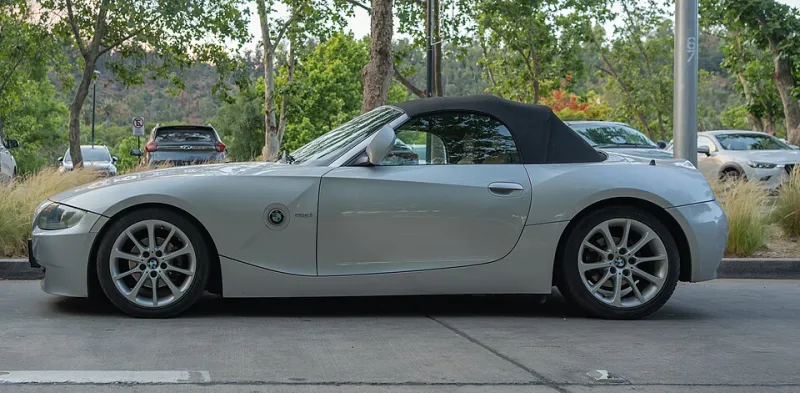
Photo: Rjcastillo, CC BY 4.0, via Wikimedia Commons
A low-mileage BMW with a clean auction sheet and a spec list longer than a Black Country queue for a good chip shop is always going to turn heads. Japanese-market imports have a loyal following for exactly that reason: often well kept, frequently low mileage and sometimes loaded with equipment that UK buyers never got. But a fresh import is not automatically a bargain. For a Wolverhampton driver, the question is not whether a Japanese BMW looks tempting in the photos. It is whether the total cost still makes sense once it is sitting on your drive, registered, insured and ready for the M54.
Why Japanese-market BMWs get noticed
Japan has a culture of careful ownership, regular servicing and rigorous inspection. Cars are often kept for shorter periods and used less intensively than a typical UK commuter car, which is why you see examples with remarkably low kilometres for their age. Specification can also be generous: leather, sunroofs, upgraded audio, adaptive lights and other options that were optional here or simply not offered on the same trim.
That is the appeal. The trap is assuming that a low odometer reading and a shiny auction photo add up to a straightforward purchase. An import is a project with paperwork attached, even when the car itself is sound.
The auction sheet is your first service history
Japanese auctions use a grading system, and it is worth learning the basics before you fall for a listing. Grades generally run from 1 to 5, with 4 and 4.5 being strong condition reports and 5 being rare. You will also see R, RA and R1 markings, which usually indicate accident history or repair work. A grade 3 car can still be a good buy, but it should be priced accordingly and inspected closely.
Auction sheets often include comments about scratches, dents, tyre condition and interior wear. They are useful, but they are not a substitute for a proper inspection. Photos can hide a lot, and a translated sheet is only as good as the translation. If you are buying remotely, use an agent who will look at the car properly rather than simply bid on your behalf.
Kilometres, clocks and the MOT question
Kilometre-to-mile conversion is simple enough: multiply by 0.621371. A car showing 60,000 km has covered roughly 37,300 miles. That sounds lovely until you remember that UK requirements expect a speedometer to read in miles per hour. Many imports need a speedo conversion, a delimiter removal or a new dial face, and the odometer should be converted properly rather than left as a confusing mix.
Check that the conversion has been done to a good standard. A cheap chip and a sticker can look messy, and a muddled odometer history makes resale harder. Ask for photographs of the cluster before and after, and make sure the paperwork supports the mileage story.
Rust protection matters more than the auction grade
Japanese cars can be remarkably solid underneath, but they are not immune to corrosion, and UK roads will test any car with salt, slush and damp. A clean Japanese example may never have seen the kind of winter treatment that a Wolverhampton car sees on the A449 in January.
Have the underside inspected on a ramp. Look at the sills, jacking points, subframes, brake lines, boot floor and the area around the battery. If it is clean, get it undersealed properly. If it is not clean, walk away or budget for welding. A grade 4 auction sheet does not tell you what the rear subframe will look like after three British winters.
Screens, radios and Japanese electronics
The infotainment is where many imports become slightly annoying. Japanese FM radio bands typically run from 76 to 90 MHz, while UK FM runs from 87.5 to 108 MHz. Some cars can be adapted with a band expander, but reception may still be patchy. Others need a new head unit, which can affect steering wheel controls, parking sensors and the display.
Navigation and connected services are often Japan-specific. Do not assume that a Japanese-market iDrive system will simply work with UK maps, traffic data or BMW connected services. DAB radio may be absent. Check the screen language, the reversing camera, the climate controls and the audio before you commit. Some of these issues are cheap to solve. Some are not.
The paperwork pile: customs, IVA and DVLA
This is the part that separates a bargain from a headache. Shipping, auction fees and agent costs are only the start. You will need to account for UK customs duty and VAT, normally 10% duty and 20% VAT on the imported vehicle and shipping costs, depending on the circumstances. The car must be declared through the NOVA system, and then there is the question of Individual Vehicle Approval, or an exemption depending on the vehicle's age and type.
In practical terms, an import often needs an IVA-style check, an MOT, changes to the lights and rear fog lamp, and then DVLA registration. You will be dealing with forms, fees and the possibility of failed inspections. A specialist importer can handle this, but the cost is real and should be in your budget from day one. If someone is selling a car that is already UK registered with a V5C, that is a much easier starting point.
Insurance can be the quiet deal-breaker
Japanese-market BMWs do not always appear neatly on UK insurer databases. The model name may be familiar, but the exact specification, chassis code and security equipment can cause questions. Some mainstream insurers will decline; others will quote only after a long phone call. Specialist brokers are often the answer, but you should get a quote before you buy, not after.
Have the chassis number and full model details ready. Ask about alarm and immobiliser specification, tracker requirements and any modifications. A cheap import that costs several hundred pounds more to insure each year is not a cheap import at all.
Parts are mostly fine, but not always simple
Underneath, many Japanese-market BMWs share mechanical parts with UK cars. Brakes, suspension components, filters, belts and common engine parts are often straightforward. The tricky bits are trim, lighting, infotainment, body panels and any Japan-specific equipment. A rare interior colour or a unique stereo can turn a simple repair into a parts hunt.
Use the BMW part number where possible, and build a relationship with a specialist breaker or parts supplier. Do not assume that a UK brochure spec will match what is fitted to the car. A good inspection will identify any oddities before they become expensive surprises.
The final maths for a Wolverhampton buyer
Add it all up: auction price, agent fee, shipping, customs duty, VAT, IVA or exemption work, MOT, registration, speedometer conversion, radio fixes, undersealing, tyres if needed, and insurance. Then compare that total with a UK-supplied BMW of similar age and mileage, with a known history and a V5C already in hand.
Sometimes the import still wins, especially if you want a genuinely low-mileage example, an unusual specification or a car you plan to keep for years. Often, once the preparation costs are counted, the gap closes. For a cash buyer who enjoys the process and wants something a bit different, a Japanese import can be a sensible enthusiast choice. For someone who wants a simple daily driver with easy finance and easy resale, a UK car is usually the calmer route.
Our advice is simple: buy the paperwork and the inspection, not the mileage. If the auction sheet, customs documents, UK registration and underside all stack up, a Japanese-market BMW can be a lovely thing to own in Wolverhampton. If any part of that chain is vague, walk away and find a car with a clearer story.