Cold Start to Dual Carriageway: The Used BMW Test Route That Tells You Everything
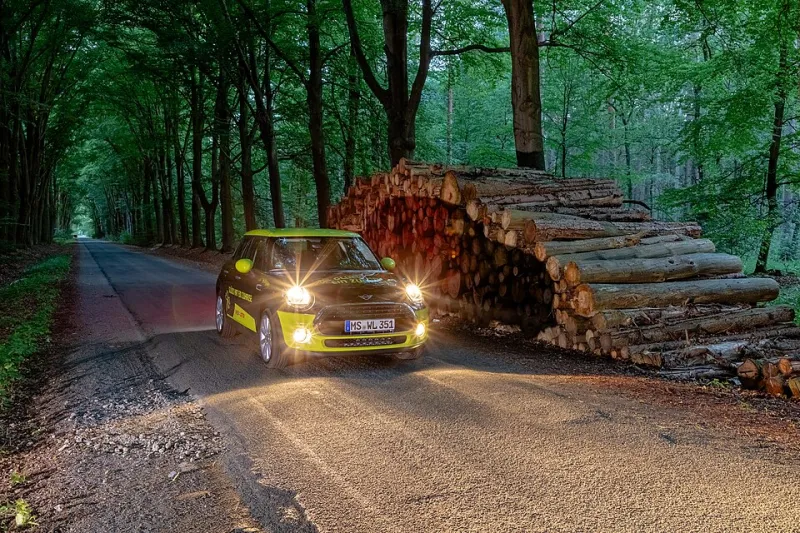
Photo: Dietmar Rabich, CC BY-SA 4.0, via Wikimedia Commons
There is a particular sort of optimism that comes with viewing a used BMW. The paint is glossy, the alloys have been dressed, and the seller has a folder of paperwork that looks reassuringly thick. But a car can hide a lot in a stationary forecourt. The real story tends to emerge once the engine is cold, the traffic is heavy, and the road surface stops being kind.
That is why we like a simple seven-mile loop around Wolverhampton for any used BMW you are serious about. It is not a racetrack lap or a motorway marathon. It is a proper mixed bag: a cold start, city stop-start, scruffy back streets, and a faster dual-carriageway stretch. Done in the right order, it gives you a decent read on the engine, gearbox, suspension, tyres, and whether the car has been looked after or merely made to look that way.
Start cold, not warm
Arrive early enough to see the car before it has been moved. If it is already warm when you get there, that is not automatically a red flag, but it does remove one of your best diagnostic tools. A genuine cold start tells you things a warm engine cannot.
From the dealership or seller's forecourt, head out towards Penn Road. Keep the radio off and the windows up for the first mile. Listen for the first few seconds of idle: a sharp rattle, a puff of blue smoke, or a noticeably lumpy tick-over on a diesel are worth noting. BMW's four-cylinder diesels can sound a little agricultural when cold, but they should settle quickly. Petrols should idle smoothly once the initial fast-idle phase drops.
While the engine is still warming, watch the temperature gauge and the iDrive display. A car that takes an age to reach temperature, or one whose heater blows lukewarm air for too long, may have a thermostat issue. On an electric BMW, this is where you check the battery percentage and whether the car has been sitting at a high state of charge for weeks — not ideal for long-term battery health, though rarely a deal-breaker on its own.
City stop-start: the gearbox test
Carry on into the Ring Road and let the traffic do its thing. Wolverhampton city centre is not exactly the M25, but the stop-start nature of the A4150 is perfect for assessing an automatic gearbox. BMW's ZF eight-speed is generally excellent, so any hesitation, thumping, or shunting between first and second is worth investigating.
At low speeds, feather the throttle and then lift off. A good gearbox should shuffle through the ratios almost imperceptibly. If you feel a pronounced jerk or a delay when pulling away from a standstill, it could be anything from low fluid to a mechatronic issue. Neither is cheap.
This is also the point to test the brakes at low speed. BMW brakes can feel a little grabby when cold, especially on cars with performance pads, but they should not shudder or squeal. If the pedal feels long or spongy, budget for investigation.
For hybrids and EVs, use this section to feel the handover between regenerative braking and friction brakes. It should be seamless. A noticeable lurch or a delay as you come to a halt suggests the braking system needs attention.
Back streets and potholes: suspension and trim
Leave the Ring Road and loop through the residential streets towards Whitmore Reans and Newhampton Road. This is where Wolverhampton's patchy road surfaces earn their keep. You are not looking for a comfortable ride — you are listening for anything that should not be there.
Speed humps, drain covers, and patched-up tarmac will expose worn suspension bushes, tired dampers, and loose trim. A faint clonk from the front end over sharp bumps could be drop links or top mounts. A rattle from the rear might be worn trailing arm bushes or a loose exhaust heat shield. None of these are necessarily deal-breakers, but they are bargaining chips.
Run-flat tyres deserve a special mention. Many BMWs leave the factory with them, and they can feel firm over broken surfaces. That is normal. What is not normal is a persistent vibration through the steering wheel or seat, which could point to a buckled alloy or an out-of-balance wheel. Check the tyre sidewalls for bulges and cracking, and look at the tread wear across the width. Uneven wear on the inner edge often hints at alignment issues that have been ignored.
The faster stretch: engine and refinement
From the back streets, join the A41 Stafford Road and head north towards the M54. This dual-carriageway section is your chance to let the car stretch its legs. Once the engine is fully warm, give it a sensible amount of throttle. You are not testing top speed; you are feeling for smooth, linear power delivery.
On a diesel, this is where you can assess DPF behaviour. A car that is constantly trying to regenerate, or one that smells strongly of diesel after a brisk run, may have a clogged filter or a lifestyle that has been too urban for too long. A long, steady run should let the engine settle. If the car feels flat or hesitant under load, it could be a boost leak, a failing MAF sensor, or an EGR issue.
On a petrol, listen for pinking or a rattle under acceleration. BMW's turbocharged four- and six-cylinder engines are generally robust, but timing chain wear on older N20 units is a known weak point. A rattle on start-up that fades quickly is one thing; a constant whine or rattle under load is another.
For electric models, use this stretch to feel the regen settings and check the power delivery. A test drive in an i3 or i4 should feel smooth and immediate. Any shuddering under hard acceleration could indicate a motor mount or driveshaft issue.
The prepped-versus-looked-after question
A used BMW can be cleaned to within an inch of its life. The engine bay may be steam-cleaned to hide oil weepage. The tyres may be over-inflated to mask a slow puncture. The fault codes may have been cleared just before you arrived. None of these are proof of a bad car, but they are reasons to look closer.
Ask to see the service history — not just the stamps, but the invoices. A car that has been properly looked after will have receipts for consumables, tyres, and any warranty work. Check the MOT history online before you go. Advisories for worn tyres or suspension components tell you more about the owner than a shiny valet ever will.
Look at the brake discs for a lip on the edge. Check the coolant and oil levels when the engine is cold. Look under the oil filler cap for mayo-like residue, which can indicate a failing head gasket or lots of short journeys. On a diesel, ask whether the car has done mostly motorway miles or city miles. The answer will tell you a lot about the DPF's likely condition.
Finally, drive the car back to the start point and park it. A good test route should leave you with a list of questions, not a vague sense of unease. If the seller is reluctant to let you take the seven-mile loop, that is information too.
Wolverhampton's roads are not the most forgiving, but that is exactly why they make such a useful proving ground. A used BMW that copes well with a cold start, a busy Ring Road, a few back-street potholes, and a brisk A41 run is usually a car worth talking about. The rest is down to the paperwork, the price, and a proper inspection. And if you are not sure, ask us — we would rather help you buy the right car than sell you the wrong one.