The Nightly Plug Test: BMW 330e vs 320d for Wolverhampton Drivers
Wolverhampton commutes have a habit of being shorter than they feel. A run from Tettenhall into the city centre, a drop-off in Compton, a meeting in Birmingham and then the crawl back up the A41 — none of it is glamorous, and most of it happens at low speed. That is exactly the sort of duty cycle where a plug-in hybrid can shine. It is also the sort of duty cycle that can quietly punish a diesel.
In 2026, the BMW 330e and 320d remain the two default answers for buyers who want a saloon that can do the school run, the office and the occasional motorway trip without drama. They look similar on the forecourt. They behave very differently once you start living with them.
The short-commute case for the 330e
The 330e's party trick is simple: for the first 30-odd miles of a journey, it can behave like an electric car. In mild Black Country weather, expect low-to-mid 30s of real-world electric range, dropping when the heater, lights and wipers are all working. That is enough to cover a Wolverhampton-to-Birmingham commute and back for many drivers, provided they can charge at home or at work.
For school runs, the difference is stark. A petrol or diesel engine idling outside the school gate is wasteful and unpleasant; the 330e can creep away in silence and leave the engine off. If your week is a patchwork of short trips, the 330e turns fuel stations into occasional stops rather than weekly ones.
Where the 320d still wins
The 320d is not a dinosaur. It is a long-legged, efficient motorway car that will return 50-60mpg on a steady run and shrug off high mileage in a way that few petrol hybrids can match. If your working life involves regular trips to Manchester, London or the East Midlands, the diesel's advantage is real. It also avoids the 330e's biggest weakness: weight. The plug-in hybrid carries a battery and electric motor, and you feel that in the corners and under braking.
The 320d's other advantage is simplicity. One fuel source, one drivetrain, no charging cable to remember. For a driver with no driveway and no reliable charging, that matters more than any official economy figure.
The charging habit is the whole game
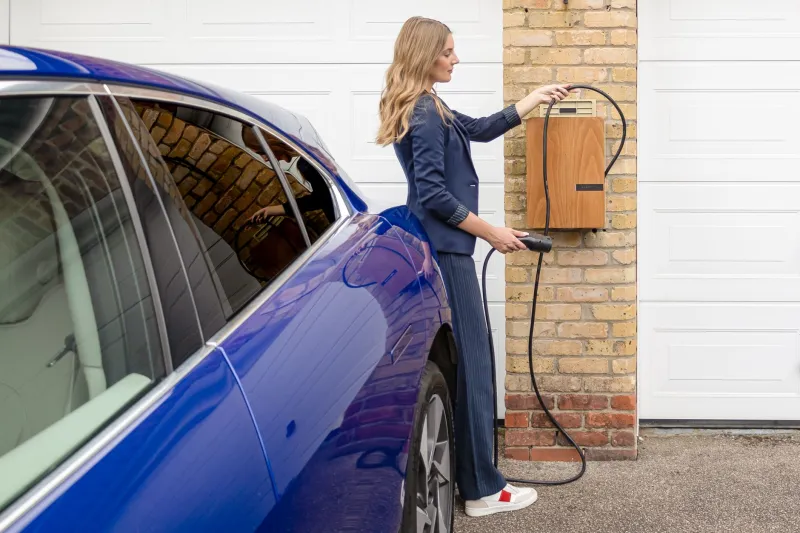
This is the bit that decides the argument. A 330e that is never plugged in is a heavy petrol saloon with modest economy. A 330e that is charged every night is a genuinely cheap commuter. The difference between those two ownership experiences is not the car; it is the driver's routine.
If you have a driveway, a garage or a workplace charger, the 330e makes a lot of sense. If your only parking is on-street outside a terraced house in Whitmore Reans or Bilston, the maths gets shaky. Public charging can cost more per mile than petrol, and hunting for a free postcode adds friction to a commute that should be simple.
Costs: fuel, servicing and tax
On fuel, the 330e can be very cheap for short journeys and merely average on longer ones. The 320d is consistently efficient, especially on motorways. On servicing, the 330e has both an engine and a high-voltage system, so there is more to inspect, though brake wear is often lower thanks to regenerative braking. The 320d's known weakness is the short-run diet: a diesel that never gets warm is a DPF and EGR valve waiting to happen. If your commute is three miles each way, the 320d is the wrong tool.
Company car tax is another point in the 330e's favour. PHEV benefit-in-kind is linked to electric range, and the 330e's official electric range puts it in a lower band than a 320d for many drivers. Exact figures depend on your tax year and the car's specification, so check before you sign.
Resale and the break-even point
Resale values for the 320d remain strong because high-mileage drivers still want them. The 330e's resale depends on battery health and whether the first owner actually charged it. A well-documented 330e with a healthy battery is desirable; one that has spent its life as a petrol car is harder to sell.
The break-even point is roughly this: if you do 8,000-12,000 miles a year, mostly short trips, and you can charge at home, the 330e will likely cost less to run. If you do 18,000+ miles a year, mostly motorway, the 320d will usually be the cheaper and more relaxing choice.
The Wolverhampton verdict
Neither car is a bad decision. The 330e rewards routine and punishes improvisation. The 320d rewards distance and punishes short trips. For a Wolverhampton driver doing a short commute, school runs and the occasional motorway blast, the 330e is the more modern fit — but only if the charging habit sticks. If it won't, the 320d remains the safer, simpler companion.