Second-Hand i4, First-Time Electric: A Wolverhampton Buyer's Field Guide
Why a used i4 makes sense now
The BMW i4 has been with us since 2021, which means there are now plenty of second-hand examples floating around the West Midlands. That is good news for buyers: early depreciation has done its thing, and you can get a properly premium electric hatchback for less than a new mid-spec 3 Series. By late 2026, the i4 is no longer a novelty — it is a used car with a known record, a growing specialist knowledge base and a real choice of trim levels.
The i4 is not a tiny city EV. It is a proper BMW with usable rear seats, a hatchback boot that swallows a weekly shop from Bentley Bridge, and enough range for a weekend away without a charging spreadsheet. But buying used means checking the things that matter, not just kicking the tyres and falling for the badge.
Battery health: the non-negotiable
Ask for a battery state-of-health report before you talk about price. A healthy i4 should still be in the low to mid 90s after three or four years; anything below 90% needs a very good explanation. BMW's high-voltage battery warranty runs for eight years or 100,000 miles, so check the in-service date and confirm whether the warranty transfers to you.
Use an OBD app or ask a BMW specialist to read the pack data. Repeated DC rapid charging is not a deal-breaker, but it does add heat cycles, so it is worth knowing how the car has lived. Also check the software version, any outstanding recalls, and whether both charging cables are present. A missing cable is not the end of the world, but it is a useful negotiating point.
Real range in West Midlands conditions
The official WLTP figures look lovely. Wolverhampton does not always cooperate. Expect 10–15% less in a cold snap, and more if you are doing 70mph up the M54 with the heater on and the wipers going. An eDrive40 is the sensible long-range choice; an M50 is faster but thirstier.
In mixed local driving — A449 commuting, school runs, the occasional run to Birmingham — most owners see 3.5–4.2 miles per kWh. That is roughly 250–300 miles from a full charge in decent weather. In January, with a pre-conditioned cabin and a gentle right foot, you might see closer to 220–250. If your weekly routine fits inside that, you will be fine. If it does not, be honest with yourself before you sign.
Charging around Wolverhampton
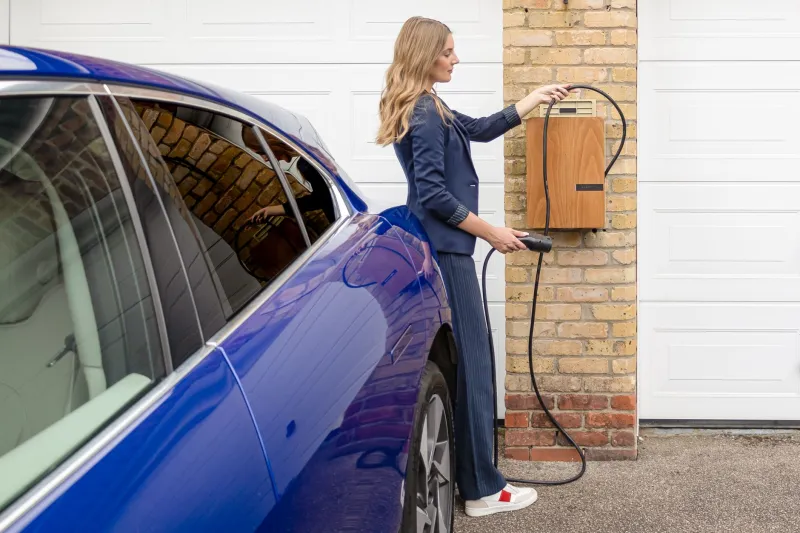
If you have a driveway, home charging changes everything. Off-peak electricity can make the i4 cheaper per mile than boiling a kettle. If you do not, be realistic about public charging. Wolverhampton and the Black Country have more chargers than they did a few years ago, but rapid hubs still get busy, and not every post is working when you arrive.
Check Zapmap for live status and do not rely on a single post at a retail park. The i54 and M54 corridor are useful, and there are options around Bentley Bridge and the city centre, but always have a plan B. A 7kW home charger is plenty for overnight top-ups; a 50kW rapid is for longer journeys, not daily life. If you cannot charge at home, factor in the time as well as the cost.
Running costs vs a petrol 3 Series
Here is the honest maths. A home-charged i4 costs roughly 2–4p per mile. Public rapid charging is more like 10–12p per mile. A petrol 320i at 40mpg and £1.45 a litre is around 16p per mile. Servicing is cheaper — no oil, fewer filters, and regenerative braking saves discs and pads — but tyres are heavier and wear faster, and insurance can be higher.
Depreciation has already taken the biggest hit on used examples. Compare a 2022 i4 eDrive40 with a similar-age 320i and the i4 can be the smarter long-term purchase, provided you can charge at home. If you are relying on public rapids every week, the gap narrows quickly.
The 10-point used i4 checklist
- Get a battery state-of-health report and check the warranty start date.
- Verify mileage and service history — main dealer or reputable specialist.
- Check the software version and any outstanding recalls.
- Test every charging method, including AC and DC.
- Inspect tyres for uneven wear; the i4 is heavy.
- Check brake discs for corrosion, not just pad thickness.
- Test climate control and the heat pump if fitted.
- Look for kerb damage on alloys and scrapes underneath.
- Confirm both charging cables and the home charger, if included.
- Get a pre-purchase inspection from a BMW specialist.
The Benham Wolves view
At Benham Wolves BMW we would rather you bought the right i4 than the cheapest one. A cheap example with a tired battery and no warranty is not a bargain. A well-kept car with a clear health report and proper history is worth the premium. If you are local, ask us to look over a car before you commit — we know what these cars like and dislike, and we would rather tell you now than see you back in six months with a problem.