The Kerbside Kilowatt: BMW EV Ownership From a Wolverhampton Terrace
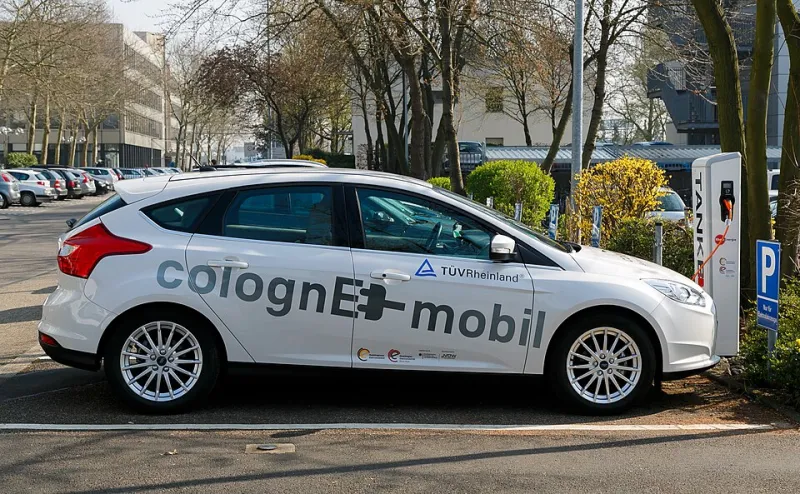
Photo: CEphoto, Uwe Aranas, CC BY-SA 3.0, via Wikimedia Commons
There is a particular look a Wolverhampton driver gives you when you mention an electric BMW and they live on a terraced street. It is not hostility. It is arithmetic. They are picturing the car, the charging cable, the pavement, the nearest rapid charger and the weekly shop, all at once. Fair enough. Running an EV without a driveway is not impossible, but it does ask you to trade a little spontaneity for a bit of routine.
The good news is that the routine can be genuinely liveable. The less good news is that it is rarely as cheap or as effortless as the brochure version. Here is the honest version for anyone in Wolverhampton considering an electric BMW while parking on the street.
Start With the Honest Arithmetic
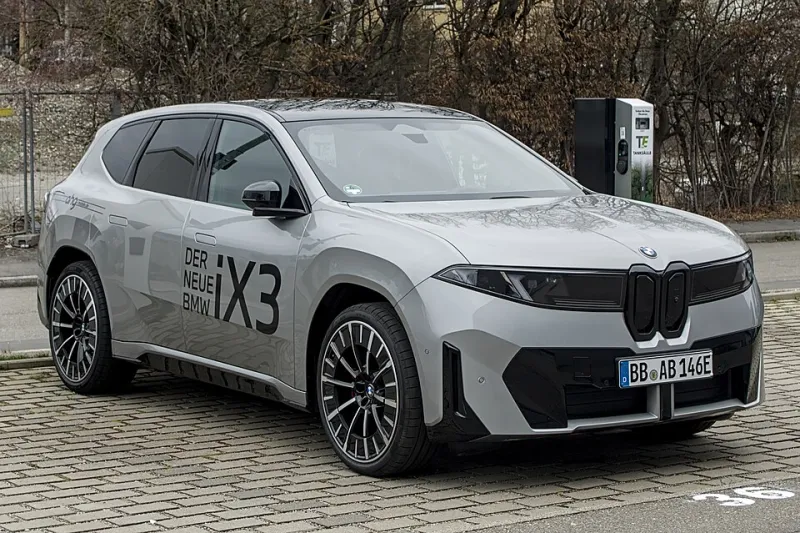
Home charging is the gold standard because it is cheap, slow and invisible. You plug in, you go indoors, you wake up to a full battery. Off-peak domestic electricity can still cost pennies per kWh, which makes a BMW i4 or iX3 look remarkably cheap to run. Without a driveway, that advantage largely disappears.
Public charging splits into two broad camps. AC chargers — typically 7kW to 22kW — are slower but cheaper. DC rapid chargers are fast but dearer. As a rough 2026 guide, public AC might sit around 45p to 60p per kWh, while rapid charging can be 75p to 85p per kWh or more depending on the network and location. A BMW i4 averaging around 3.5 to 4 miles per kWh will use roughly 2,000 to 2,300 kWh over 8,000 miles. At public AC prices that is somewhere in the region of £900 to £1,400 a year. At rapid prices it can climb towards £1,700 or more.
That is not catastrophic. It is simply not the £200-a-year fantasy that driveway owners enjoy. If you are moving from a diesel BMW, the fuel saving may still be real, but it will be smaller and more dependent on where and when you charge.
The Public Network Is Not One Thing
Treat public charging as a collection of different tools rather than one backup plan. A 7kW AC post in a council car park is a different proposition from a 150kW rapid at a motorway services. The first suits a two-hour shopping trip or a cinema visit. The second suits a long journey and a coffee stop. Neither suits a five-minute panic.
In and around Wolverhampton, the useful charging spots tend to cluster around retail parks, leisure centres, council car parks and the usual trunk-road stops. The exact mix changes, so check Zapmap or Chargemap before you rely on a particular site, and cross-check with the BMW app if your car supports it. Reliability matters more than headline speed. A working 11kW AC post near your house is worth more than a broken 150kW rapid that looks impressive on a map.
Also read the signs. Some bays have time limits, idle fees or parking charges on top of electricity. Some are in car parks that lock overnight. A charger that looks perfect at 2pm may be useless at 10pm.
Lamp Posts, Cable Channels and Council Realities
On-street residential charging is the missing piece in many UK towns, and Wolverhampton is no exception. Lamp-post chargers and cable channels — the shallow gullies that let a cable cross the pavement safely — have been piloted in various places, but they are not yet a universal right. Where they exist, they tend to be slow AC points designed for overnight charging rather than rapid top-ups.
The practical rule is simple: do not run a cable across the pavement without checking what the council allows. It is a trip hazard, an insurance question and, in some streets, a planning issue. If you rent, ask the landlord. If you live in a conservation area or a terrace with narrow pavements, the answer may be more complicated. Wolverhampton Council's current residential charging plans are worth checking before you buy, not after.
Where a scheme does exist, it can transform the ownership experience. A 5kW or 7kW lamp-post charge overnight is exactly the sort of slow, boring charging that suits a terraced street. It is not glamorous. It is useful.
Workplace Charging Is the Quiet Cheat Code
If your employer has charge points, treat them as the single most valuable perk in your EV maths. A 7kW workplace charger can cover a typical commute while you are at your desk. Some workplaces charge a flat fee, some charge per kWh, and some still offer free charging as a benefit. Ask about booking, fair use and whether the points are actually available when you need them.
Even a modest workplace top-up can cut your public charging bill dramatically. It also reduces the number of times you need to plan around a retail park or a rapid charger. For a Wolverhampton driver doing a regular commute to Birmingham, the Black Country or the M54 corridor, this can be the difference between EV ownership feeling easy and feeling like a second job.
A Realistic Week in a Terrace
A workable pattern might look like this. On Monday, you plug into an AC charger at a supermarket or leisure centre while doing something you were going to do anyway. On Tuesday, you top up at work. On Wednesday, you do nothing. On Thursday, you use a nearby council car park charger during a longer errand. On Friday, you check the battery before the weekend and decide whether a rapid stop is needed.
The key is to stop thinking in petrol-station terms. You are not filling up. You are topping up. Most weeks should involve one or two deliberate charging stops, not five. Keep the battery in a comfortable middle range for daily use and charge to 100% only when a longer trip demands it. Preconditioning the cabin while plugged in is also worth using in winter, because it takes the edge off the range drop without eating into your driving budget.
Where the Friction Really Lives
The friction is rarely range anxiety in the abstract. It is reliability, queues, payment apps, ice-cream vans parked in charging bays and the British weather. It is arriving at a charger to find it occupied by a diesel van. It is discovering that the app wants an account, a top-up and a sacrifice to the gods of connectivity before it will release a cable. It is winter, when every EV loses a chunk of range and the rapid charger you were counting on is offline.
Those things are manageable, but they are real. If every single charge requires a detour, a queue and a fresh app download, the novelty will wear off quickly. If you have two or three reliable options within a short drive or walk, the whole thing settles down.
Making It Work Without Pretending It Is Easy
Choose the car with the charging routine in mind. A BMW with a decent AC charging speed and strong efficiency will be easier to live with than a heavier, thirstier model. A heat pump helps in winter. A car with good route planning and accurate charger data makes the weekly plan less stressful. And a realistic test of your local charging options before you buy is worth more than any specification sheet.
At Benham Wolves BMW, we would rather have that conversation early than sell you a car that fights your street. If you can charge at work, at a nearby lamp post or during your regular shop, a BMW EV without a driveway is entirely doable. If every charge means a 20-minute round trip and a coin toss on reliability, be honest about whether that suits your week.
A terraced house does not rule out an electric BMW. It just means the charging happens out there, in the real world, with all the usual Wolverhampton weather and parking politics. Plan for that, and the kerbside kilowatt becomes a routine rather than a compromise.